
VIC ENGINEERING / VEHICLE VALIDATION
BMW M3
Touring G81
Dual-Vehicle Engineering Validation
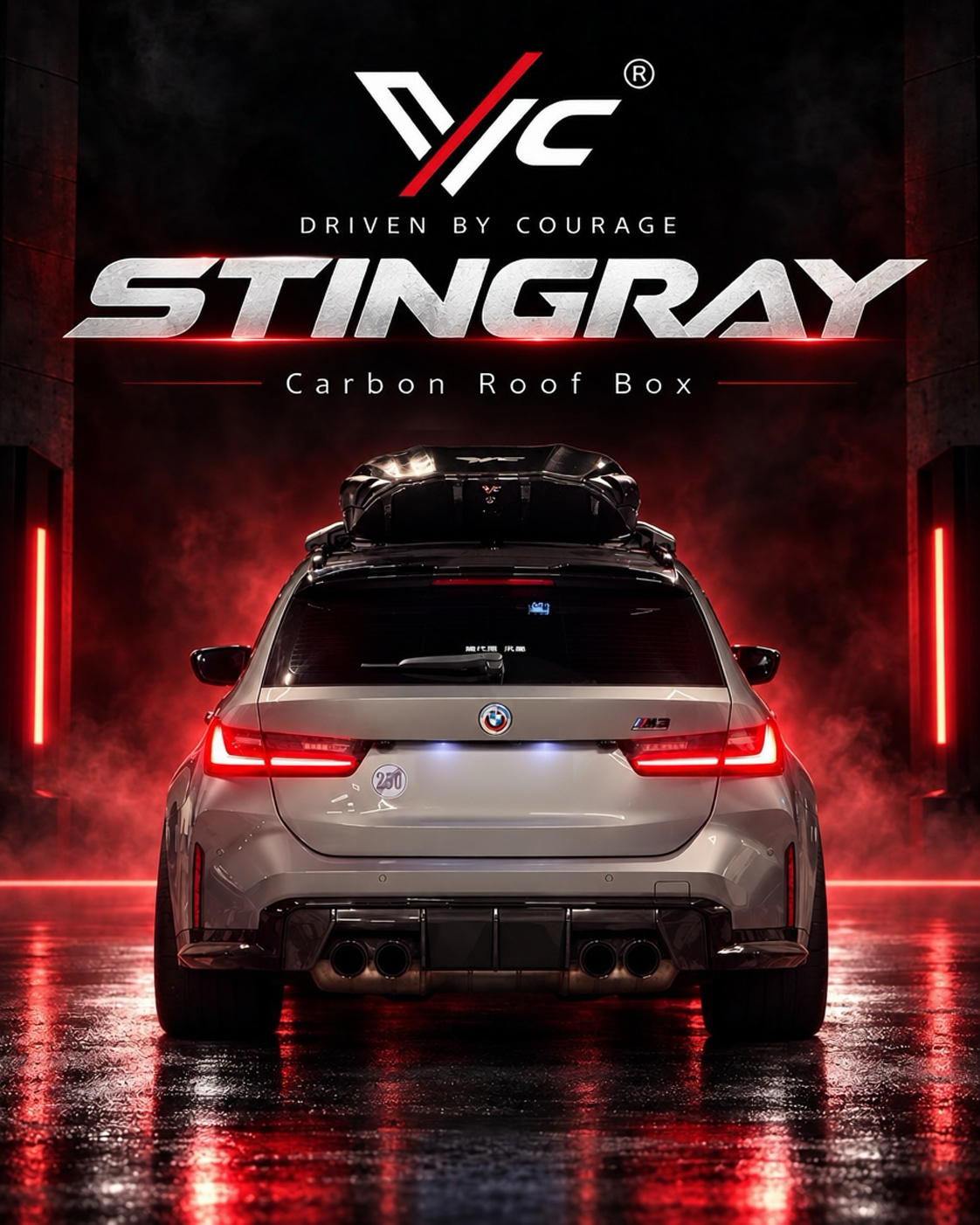
Once validation leaves VIC's own test vehicle and is placed on two different BMW M3 Touring G81 vehicles with two track-experienced performance drivers, the question is no longer only whether STINGRAY can run. It is whether different vehicles and different drivers still produce a consistent direction of real-world feedback.
01 / INTRODUCTION
From one test car
to cross validation.
VIC STINGRAY's engineering validation began with its own test vehicle: high-speed stability, wind noise, sealing, mounting structure, box position and guided airflow were all tested and corrected by VIC first.
The valuable next step was not to let the same person keep proving the same impression. It was to change the vehicle, the driver and the use environment, then check whether the direction remained consistent.
The engineering sample was therefore used on two BMW M3 Touring G81 vehicles by two different performance-car drivers. Both have real track-driving experience. One validation driver, Kimi, also has a public background connected to a BMW M3 lap-record result at Lihpao Racing Park. This background describes driving experience only; it is not an endorsement of the product.
DRIVER PROFILE
Performance drivers,
not laboratory assumptions.
Both BMW M3 Touring G81 validation drivers have real track-driving experience. Performance drivers are more likely to notice small changes in load, steering response, high-speed stability, wind noise, unusual sounds and vehicle dynamics.
When two different performance drivers experience a similar direction on two different G81 vehicles, the observation has stronger real-world reference value.
Driver experience ≠ quantitative laboratory data. Subjective feedback is recorded as experienced and is not extended to every vehicle.
G81 VERIFICATION 01 / HIGH-SPEED VALIDATION
Kimi | BMW M3 Touring G81
210
VERIFIED SPEED / KM/H
A 210 km/h verification was completed under this vehicle, mounting configuration and test conditions. The STINGRAY shell, mounting structure and airflow guide remained normal, with no functional abnormality found during the high-speed run. 210 km/h is the speed reached in this verification; it is not a product speed limit.
DRIVER FEEDBACK
“It is surprisingly quiet at high speed.”
“It feels good.”
“I do not really feel the load.”
This faithfully records my actual user feedback and does not mean all vehicles will produce the same result.
G81 VERIFICATION 02 / REAL-WORLD ROAD VALIDATION
Another vehicle,
another use environment.
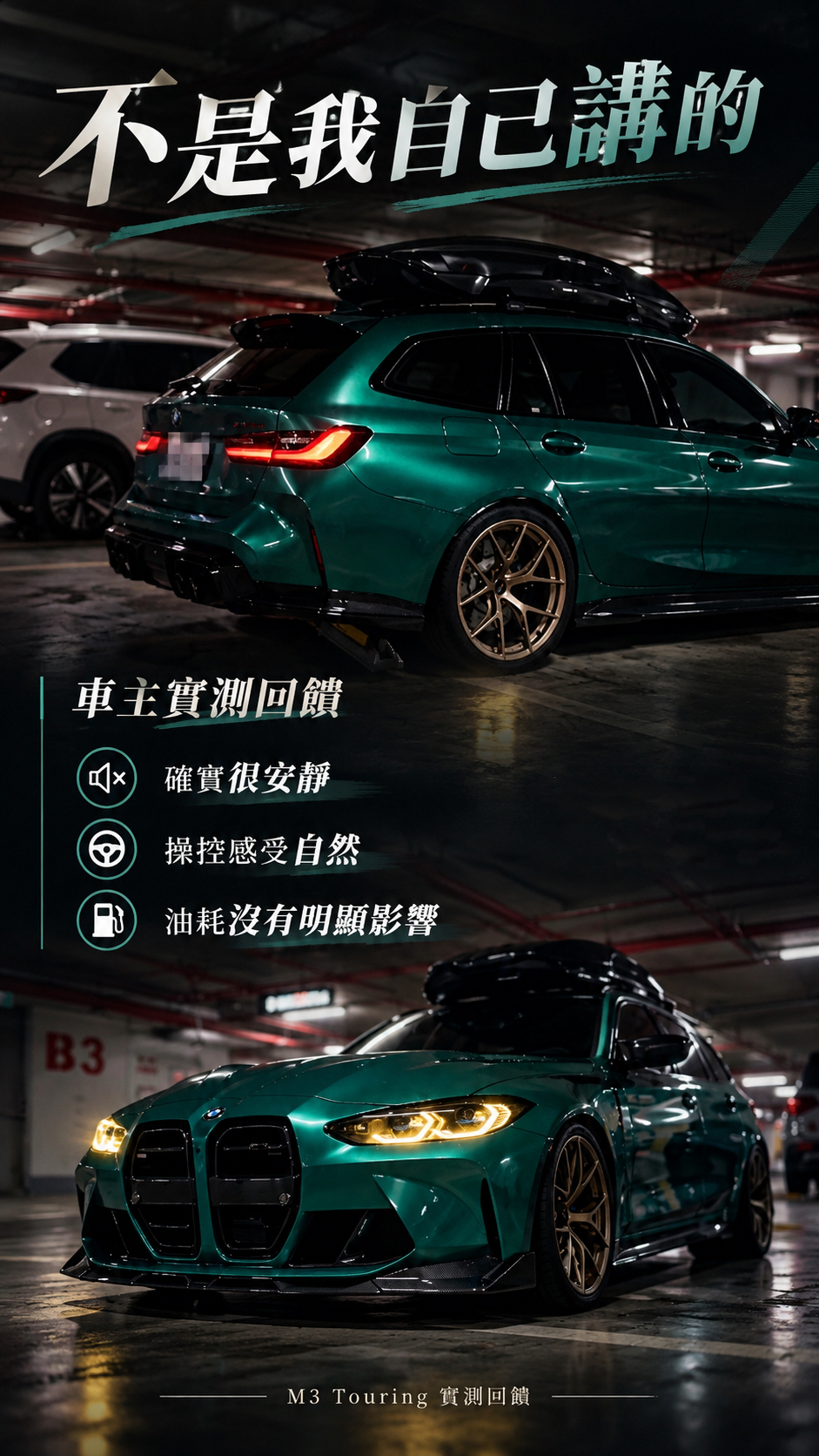
The second BMW M3 Touring G81 was used on public roads by another track-experienced performance driver. The observation covered daily road use, wind noise, perceived load, driving feel, fuel-consumption feel and vehicle-electronics compatibility.
“It is genuinely quiet, and I do not really feel an effect on handling or fuel consumption.”
This is the primary owner feedback from the second validation. The fuel-consumption portion remains a user impression, not a quantitative fuel-consumption test conclusion.
CROSS VALIDATION
Different people,
a similar answer.
Two vehicles of the same model, two different drivers and two drivers with track experience produced a similar direction of feedback under different use conditions.
HIGH-SPEED STABILITY
210 km/h
Vehicle high-speed verification completed.
Under the first G81's test configuration and conditions, no functional abnormality was found in the roof box or mounting structure.
NOISE
A consistent direction
Neither driver reported noticeable additional wind noise.
The two observations came from different vehicles and different drivers.
DRIVING FEEL
No noticeable interference
Neither track-experienced driver felt a noticeable load or steering interference.
This records driver experience; it is not a claim of zero physical effect.
FUEL CONSUMPTION
Subjective feedback
The second owner did not feel a noticeable change in fuel consumption.
No standardized quantitative A/B fuel-consumption test has been conducted.
NEW FINDING / GNSS-GPS COMPATIBILITY
Find the issue,
then find the next solution.
During real-world use of the second BMW M3 Touring G81, occasional GPS drift or signal irregularity was observed. STINGRAY uses a large carbon-fiber shell. When the OEM GNSS/GPS antenna is positioned around the roof shark-fin area and a large carbon structure sits above it, satellite-signal attenuation or blockage may occur.
CARBON STRUCTURE × OEM GNSS LOCATION
A vehicle-compatibility issue between carbon structure and the OEM GNSS antenna location.
The first G81 did not report the same GNSS issue. Variables remain, including the OEM antenna configuration, vehicle electronics, antenna signal state, relative box position, installation environment and local satellite conditions.
ENGINEERING RESPONSE
Do not move the box.
Address the signal source.
If future testing confirms that GNSS signal is being shielded by the large carbon structure on a specific vehicle, VIC's evaluation priorities include an external GNSS antenna, GNSS antenna relocation and a GPS/GNSS repeater.
DO NOT SACRIFICE THE INSTALLATION POSITION.
The installation position is not only about whether the box can be mounted. It also affects vehicle-to-box proportion, front and rear overhang, bar loading position, high-speed airflow, the existing verification setup, wind noise and overall performance aesthetics.
ENGINEERING SUMMARY
VEHICLE
BMW M3 Touring G81 × 2
DRIVERS
2 track-experienced performance drivers
VERIFIED SPEED
210 km/h
HIGH-SPEED FUNCTION
No functional abnormality found under these conditions
NOISE
Neither driver reported noticeable additional wind noise
LOAD / DRIVING FEEL
No noticeable load or steering interference felt
FUEL CONSUMPTION
Subjective user feedback at this stage
STATUS
Ongoing validation / solution evaluation
ENGINEERING CONCLUSION
If there is an issue, verify it.
Find the cause, then solve it.
Two different vehicles and two different drivers pointed in a similar direction. This does not mean every vehicle, speed or road condition will produce exactly the same result. It means the engineering direction first observed on VIC's own test vehicle is beginning to receive repeated validation from different users. The GNSS compatibility issue found on the second vehicle is also being kept in the record for continued validation.
Different cars. Different drivers. Same engineering direction.
VIC STINGRAY
DRIVEN BY COURAGE.
EXPLORE STINGRAYThis article records real-world engineering validation and user feedback under specific vehicles, mounting configurations, road and environmental conditions. It does not represent a rated speed, safe speed or identical result for every vehicle. GNSS/GPS compatibility remains under evaluation.